Ridge Helmet
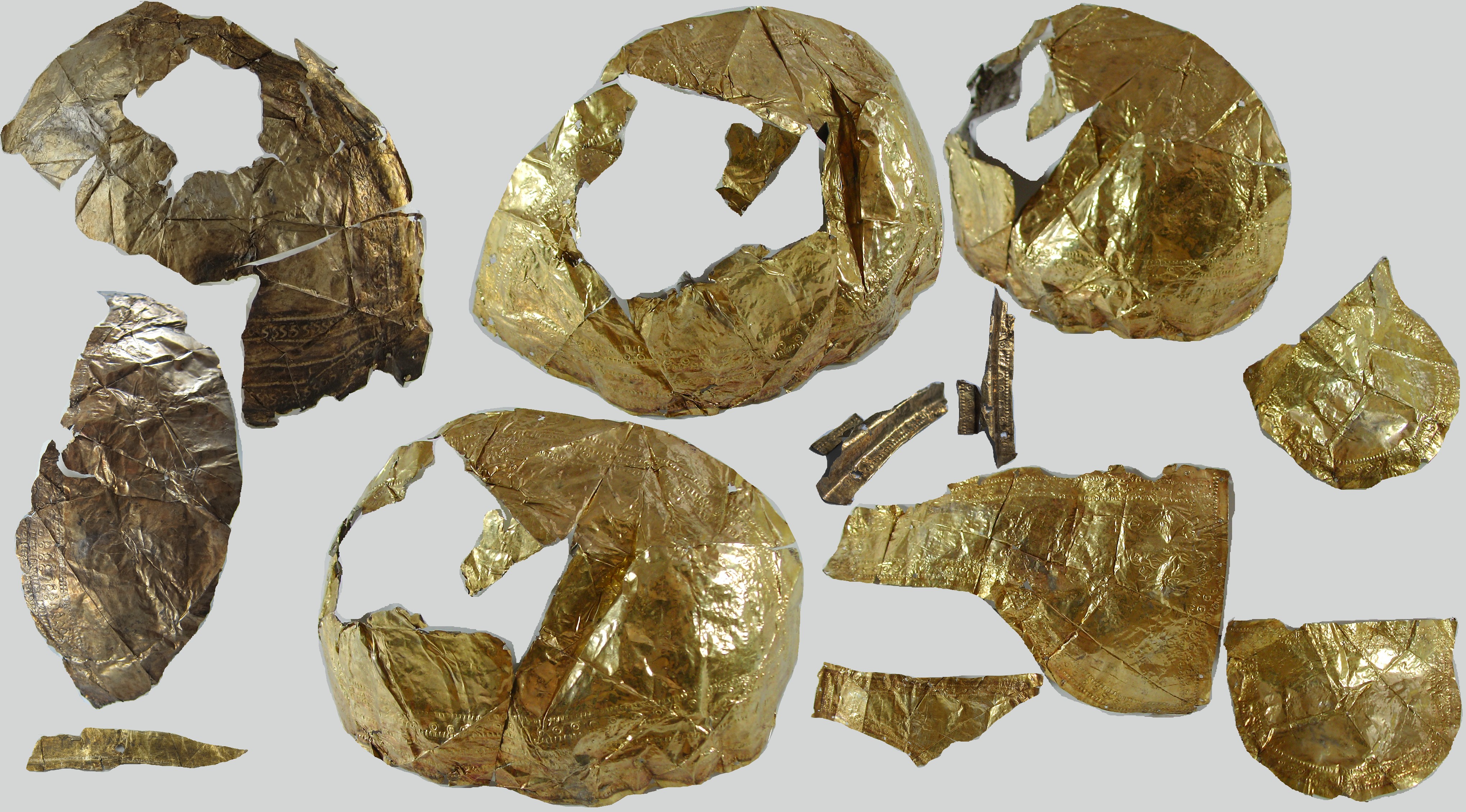
The fragmented collection of silver sheets, which are gold plated, were at one time covering at least 2 or 3 different late Roman helmets. The common term for these late Roman helmets is "Ridge Helmets". These ridge helmets consisted of two or more segments that were together to form the complete helmet. In this case these fragments clearly come from two original halves and were riveted together around the top. Only the more elaborate helmets were covered in a gold covering, and would have likely been reserved for the emperor or highest field commanders
Bronze Gold Fibula (4th Century AD)
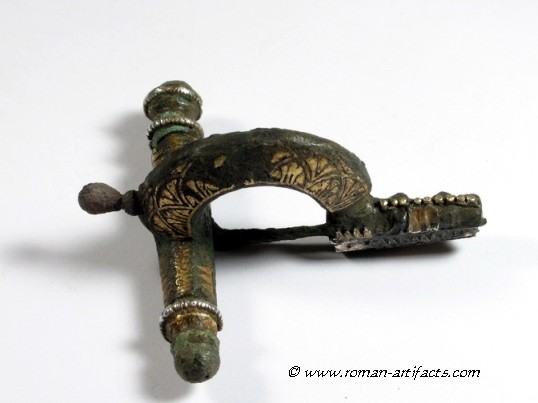
Fibula was used to hold together the Toga/clothing of the Roman Soldier and Citizen. This style was called "Crossbow" due to its unique shape similar to a crossbow. Fibula with amazing gold foiled design along the arch and cross piece. The arch would have been where the fabric bunched while the pin secured it.
Bone Pixus With Gold Leaf
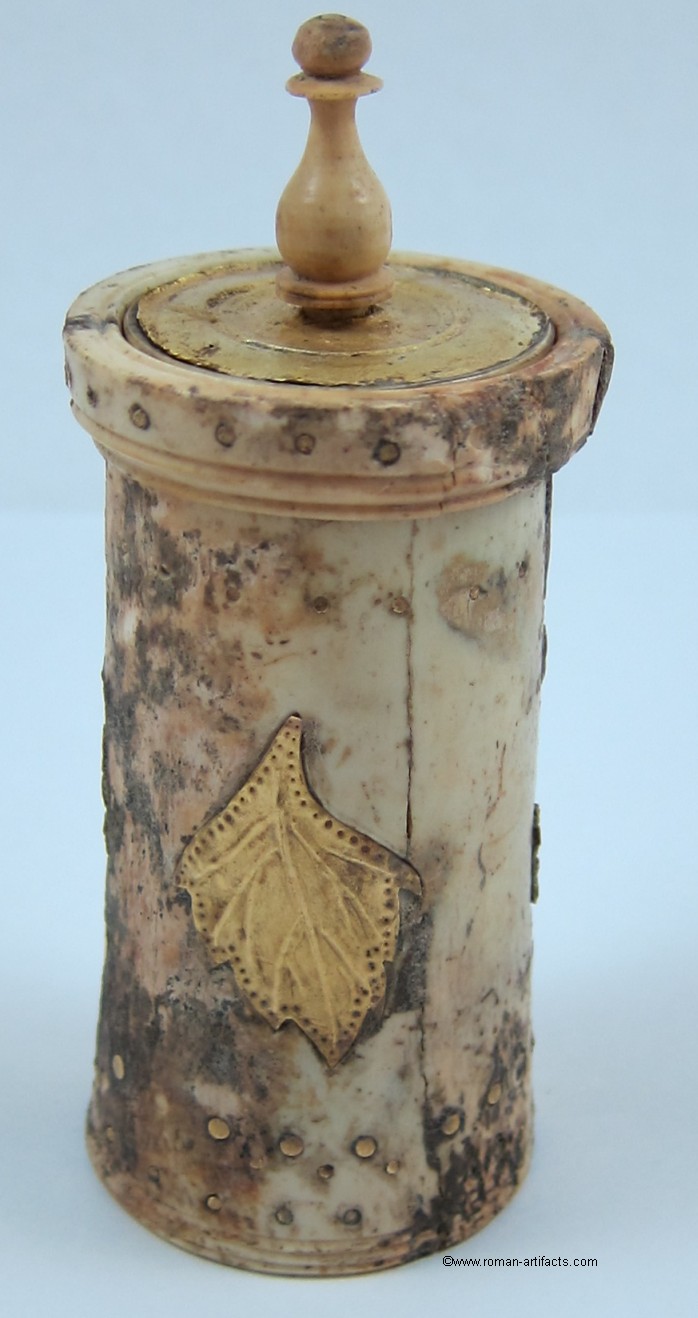
A pyxis is used to describe the shape of a small vessel with a lid and comes from ancient Greece where it was first introduced. The pyxis was likely used for holding small items such as jewelry or cosmetics. The decoration along the bottom and top consist of gold circles in two rows at the top and three rows at the bottom. The Ivy leaf is commonly used through out Roman history, mainly as a decorative addition to jewelry and military items.
Late Roman Spangenhelm Cheek Piece
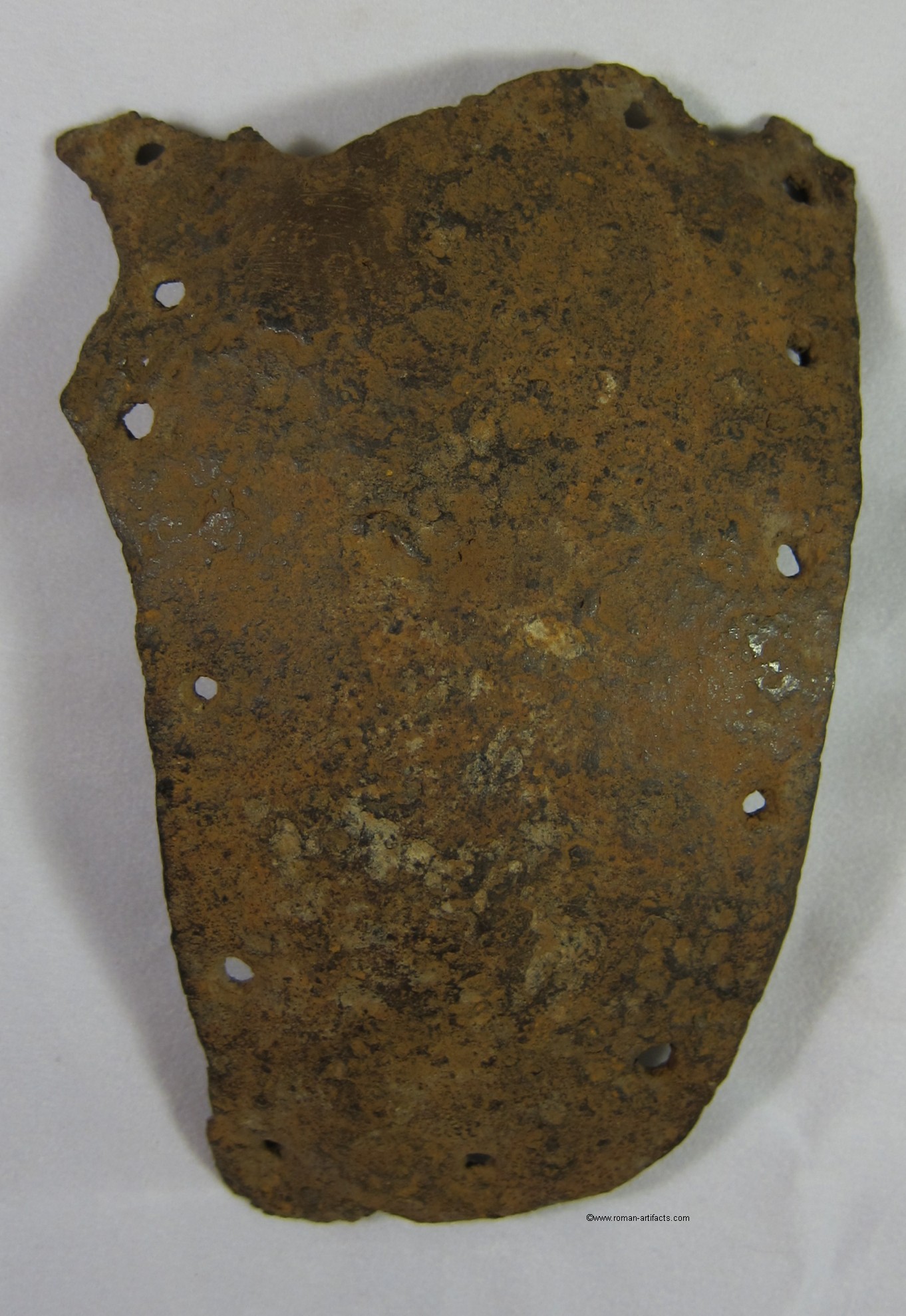
These helmets were used for a long period in ancient times, spanning the 2nd to late 7th Century. This particular style with the cut out cheek bone area is however more closely tied to the Roman period. This type of cut out was commonly seen on Intercisia Ridge helmets as well as Berkasovo helmets all prevalent during the 4th and early 5th century. The nearly complete left cheek piece for a multi-piece or Spangenhelm type helmet.
Late Roman Helmet Crest
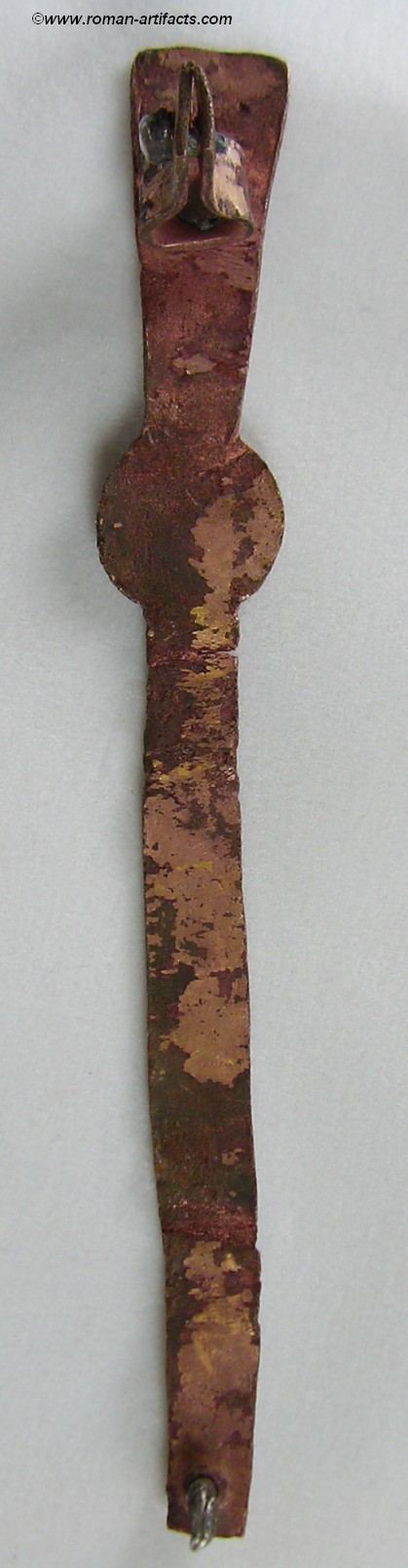
A complete bronze helmet crest for the "Intercisa II or IV" Roman helmet or other similar later Roman helmet that allowed a crest to be attached.The piece is wider at the top narrowing to the center circular image which is that of a CHI-RHO (The symbol consists of the superimposed Greek letters chi (Χ) and rho (Ρ)). What really defines this symbol however is the belief that it was first used by the great Roman Emperor Constantine I (The Great) at the battle of Melvin Bridge on October 28th, 312 AD.
Legionary Semi-Spatha
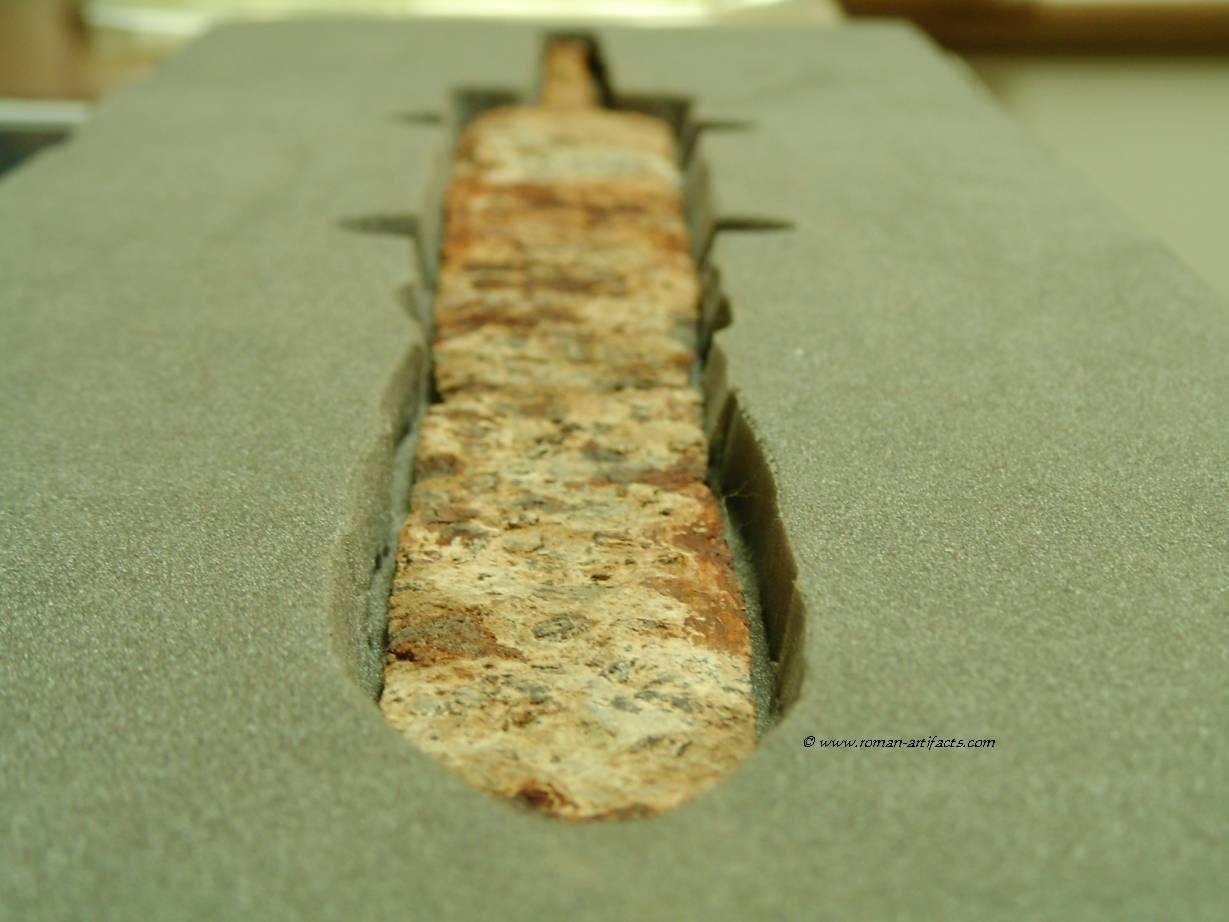
A Roman iron sword with a largely solid blade that was partially covered in what is believed to salt and/or lime deposits. The majority of these deposits are believed to be maintaining the stability of the sword. There are clear indications of where the pommel piece was as well as where the guard once existed.

No comments:
Post a Comment