Cyrus Cylinder
The 2,600 year old "Cyrus Cylinder" from ancient Babylon is considered to be the world's first human rights declaration. This piece was shown for the first time in the United States after loan from the British Museum.

Yahweh Sebaot Inscription
This limestone inscription from an unknown burial cave in Judah c. 800-750 BCE, written in Paleo-Hebrew script and reads "Cursed be Hagaf son of Hagab by Yahweh Sebaot." also translated as "Lord of Hosts" and appears over 200 times in the Hebrew Bible.

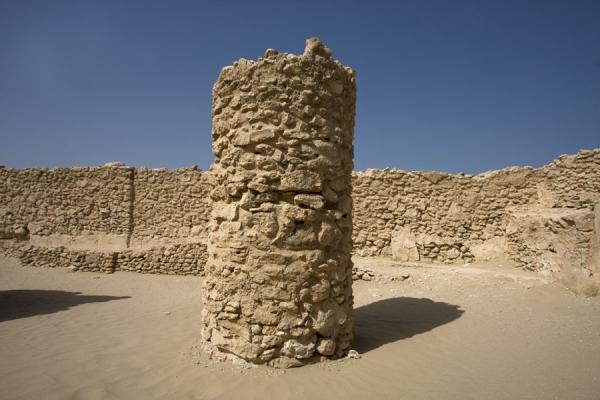
Saar Temple
The contact document was written on a clay tablet in cuneiform script. It dates between 504 and 503 BC and would normally have it's origin, in the sense of the city within which the contract was agreed, inscribed on the rear of the tablet. However, in this case the tablet had been badly scratched making it impossible to decipher.
Cuneiform Tablet
The tablet was uncovered during a seven-week investigation in the southwest corner of the fort and was found alongside a golden plate upon which a figure of a woman is visible. The plate is believed to date from 1 BC and 1 AD.

Naqsh-e Rustam
Naqsh-e Rustam is an ancient necropolis located about 12 km northwest of Persepolis, in Fars Province, Iran, with the best group of ancient rock reliefs in Iran cut into the cliff, from both the Achemenid and Sassanid periods.


No comments:
Post a Comment