Unlike previous Manifest Destiny where expansion was on the North American continent and congruous with existing territory, the new Manifest Dynasty would extend to islands that were heavily populated, far from the U.S. and not seen as suitable by the U.S. to become territories, and later states, but only as colonies.
1. Causes of American Imperialism:
A. End of the frontier: 1890 report from the Superintendent of the Census
- Many Americans believed U.S. had to expand or explode
- Increase in population, wealth, and industrial production demanded more resources
- Some feared that existing resources in the U.S. might eventually dry up
2. The experience of subjugating the Plains Indian tribes after the Civil War had established a precedent for exerting colonial control over dependent people
B. Foreign trade becoming increasingly important to American economy in the late 19th century.
- Americans considered acquiring new colonies to expand markets further
C. Desire to compete with Europe for overseas empires
-Influential minority sought international status for U.S. like Great European Powers
- Between 1870 and 1900, Europeans had taken over
3.Proponents of the U.S. expansion
- Take Hawaii and other pacific islands
- U.S. should build large Navy as well as defensive bases and refueling stations strategically placed on world oceans
- Advocated the U.S. to build different canals across Central America

In the late 1800's, the United States found itself being a powerful and commercial nation. With less concern being focused in the south, the great leaders in industry and politics were thinking of ways to move our great country forward, to secure our economic and military future in the world. They believed ours was a great land anything we could do for other nations would not only help them, but help ourselves as well. These "Imperialists" began to notice an interesting wave of events. Larger, more powerful nations were taking over smaller countries that offered products and strategical positioning. These resources could help their countries commerce and provide access to other countries.
In the 1880's, Africa was being taken over, bit by bit, by Great Britain, France, Germany and other countries. In the 1890's, the same was occuring in China. Not wanting to lose out on the chance at improving our economic future, especially after the economic crisis of 1893, American business leaders and politicians decided to take action. Our country was in a great
depression; one way to get out of it was to increase control of world markets. Aquiring new
territories met this need. We needed "archipelago", a base for
commerce, military, and naval operations to protect our country and give
quick access to other countries.
On the opposing end, The cons of imperialism argued by Anti-Imperialists were both varied and convoluted. In 1898, in response to the destruction of sugar cane crops and atrocities committed by the Spanish in Cuba, America went to war. Instead of leaving Cuba to its own devices and governing, the Platt Agreement was required in its constitution, ensuring continued American influence and presence. Following the war, the Philippines was purchased instead of holding ourselves to the limits and vision of the Declaration of Independence and our U.S. Constitution. We gained control over those peoples too, but not without the burning of villages and the torture of men paving the way to an American Empire. “What of American values?” Anti-Imperialists would say.

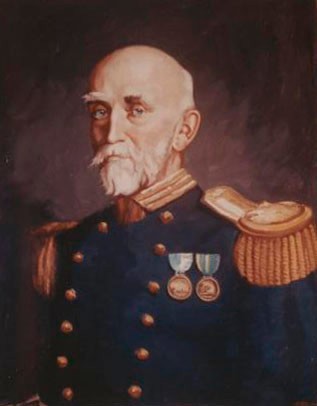
In 1890, Captain Alfred Thayer Mahan, a lecturer in naval history and the president of the United States Naval War College, published The Influence of Sea Power Upon History, a revolutionary analysis of the importance of naval power as a factor in the rise of the British Empire. Two years later, he completed a supplementary volume. Mahan argued that British control of the seas, combined with a corresponding decline in the naval strength of its major European rivals, paved the way for Great Britain’s emergence as the world’s dominant military, political, and economic power. Mahan and some leading American politicians believed that these lessons could be applied to U.S. foreign policy, particularly in the quest to expand U.S. markets overseas.